
Aerospace
Vacuum Drying for Aerospace: Moisture Control, Compliance, and Flight-Ready Performance
Overview
Aerospace components must meet the most demanding standards in engineering — and moisture is a hidden threat that compromises materials, adhesives, coatings, and electronics. Whether you're producing carbon fiber airframe parts, ceramic insulators, cable harnesses, or satellite systems, residual moisture and volatiles can lead to delamination, dimensional drift, or in-orbit outgassing.
iDRY vacuum drying systems give aerospace manufacturers complete control over internal moisture, surface prep, and outgassing — with repeatable, spec-compliant performance.
⚙️ How iDRY Vacuum Drying Works
iDRY uses deep vacuum to reduce the boiling point of water and other volatiles inside parts. Under vacuum, moisture is removed gently and thoroughly — even from internal structures, honeycomb cores, or multi-layer assemblies.
This process supports precise drying of components before bonding, coating, assembling, or packaging — without warping, overheating, or contamination.
✅ Key Benefits:
Moisture removal at low temperatures for heat-sensitive materials
Supports NASA/ESA outgassing compliance (ASTM E595)
Enables strong bond lines and void-free adhesives
Ensures dimensional stability in vacuum and thermal cycling
Uniform drying across complex geometries and composite layers
Fully enclosed chamber with data logging and QA traceability
Ideal Aerospace Applications:
Carbon fiber panels, ducts, and fairings
Honeycomb structures and bonded assemblies
Satellite components and thermal blankets (MLI)
Cable harnesses and foam insulation
Ceramics, polymers, and aerospace-grade adhesives
Additive manufactured parts (metal or polymer)
Flight hardware drying and vacuum bake-out
iDRY Ultra Vacuum Dryer – Aerospace & Advanced Materials
Precision Drying for Critical Aerospace Applications
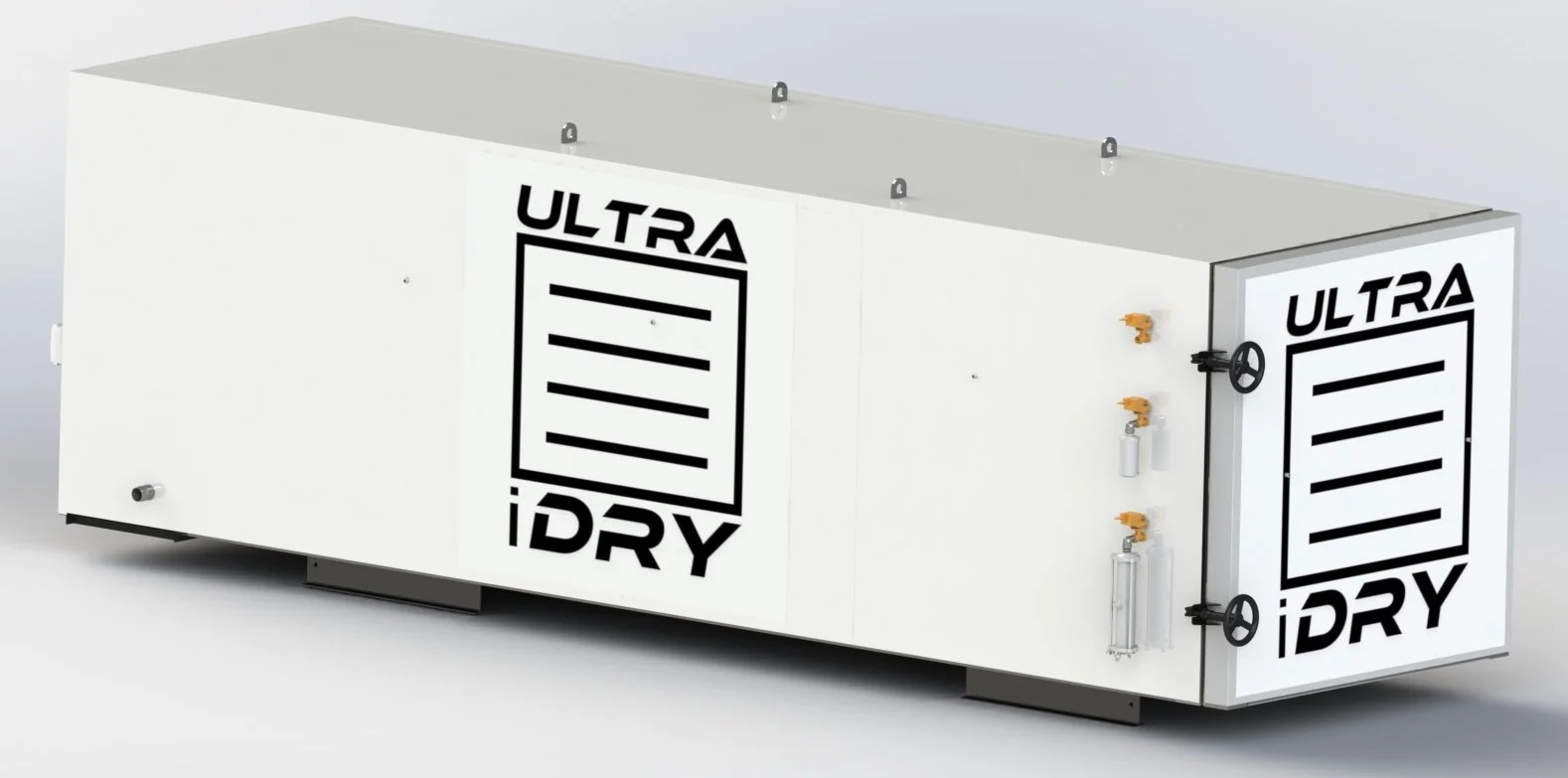
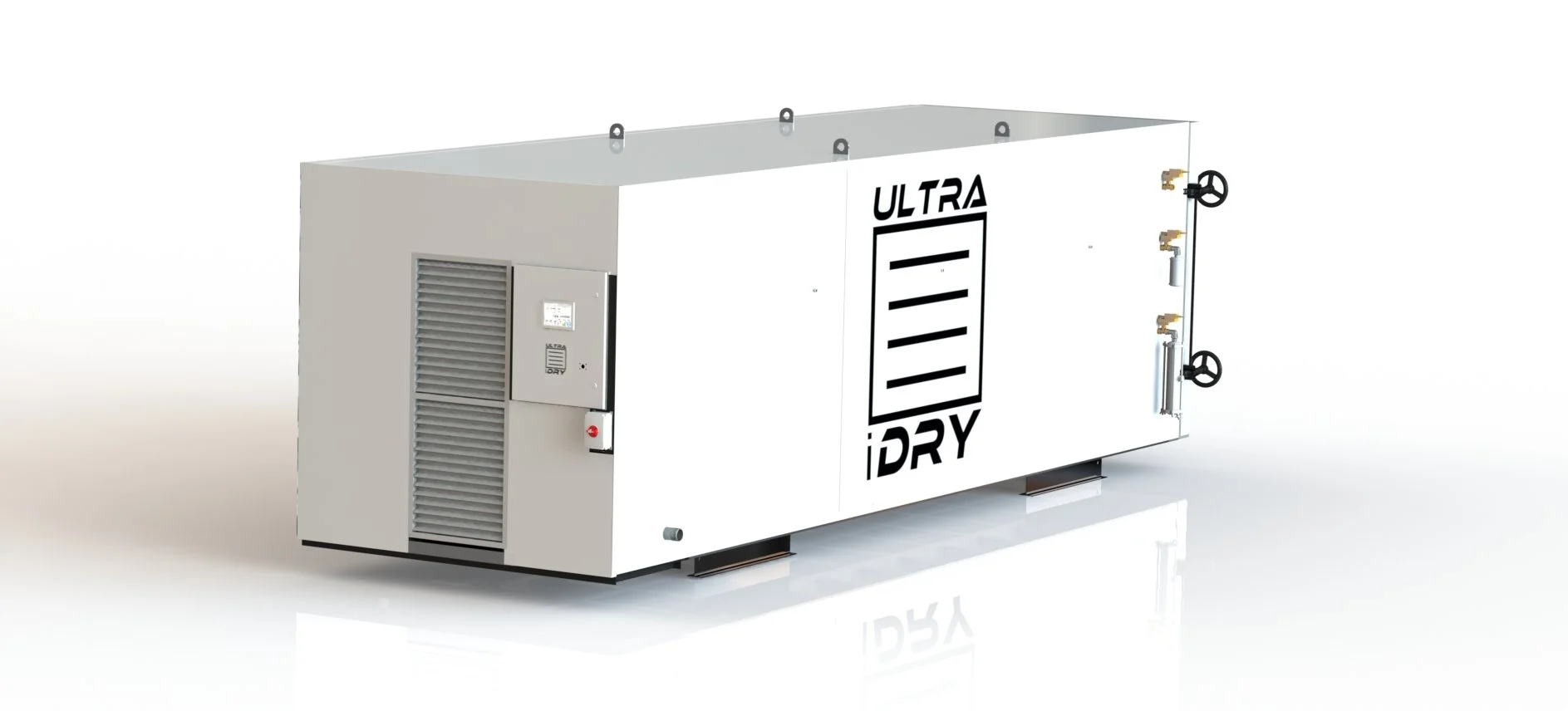
The iDRY Ultra is an advanced vacuum drying system designed to meet the extreme quality and reliability demands of the aerospace industry. By combining vacuum technology with precise thermal control, the iDRY Ultra enables complete control of residual moisture content in sensitive components, composites, and specialty materials—at any temperature required by your process.
Whether drying carbon fiber laminates, composite structures, adhesives, or critical components, the iDRY Ultra ensures uniform results without thermal degradation. Unlike conventional ovens, the vacuum environment allows moisture removal at significantly lower temperatures, preserving the structural integrity, strength, and performance of advanced aerospace materials.
Key Benefits
Controlled Residual Moisture – Achieve any moisture or outgassing target at any temperature setpoint.
Material Integrity – Low-temperature drying prevents thermal damage, resin breakdown, or warping.
Process Flexibility – Customizable cycles for composites, adhesives, ceramics, and metal parts.
Enhanced Performance – Eliminate trapped moisture and volatiles that can compromise aerospace reliability.
Scalable & Proven – Available in batch systems at a price that allows for multiple units for scale.
The iDRY Ultra delivers precision vacuum drying that meets the stringent standards of aerospace, defense, and advanced manufacturing—where performance, safety, and reliability cannot be compromised.
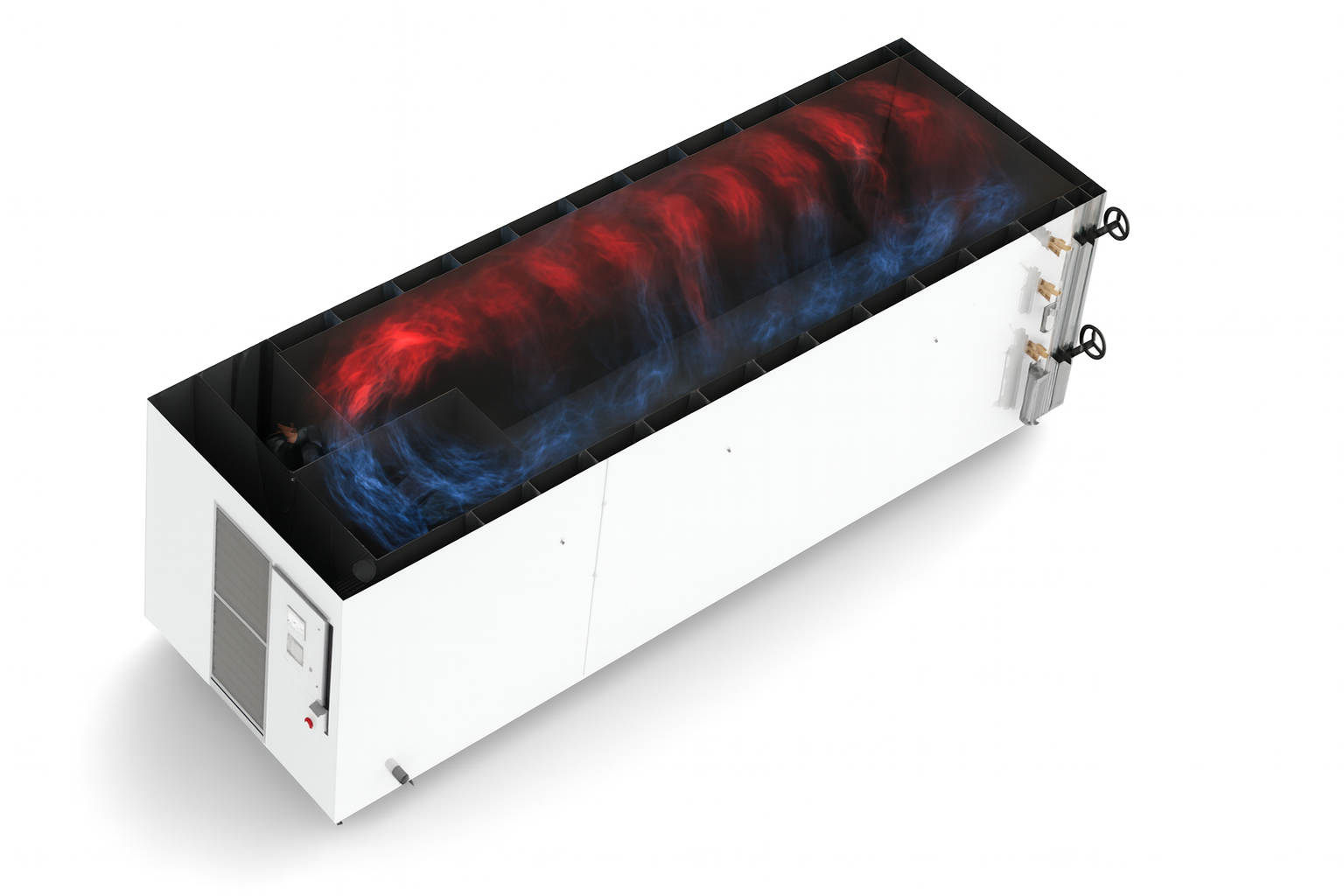
-
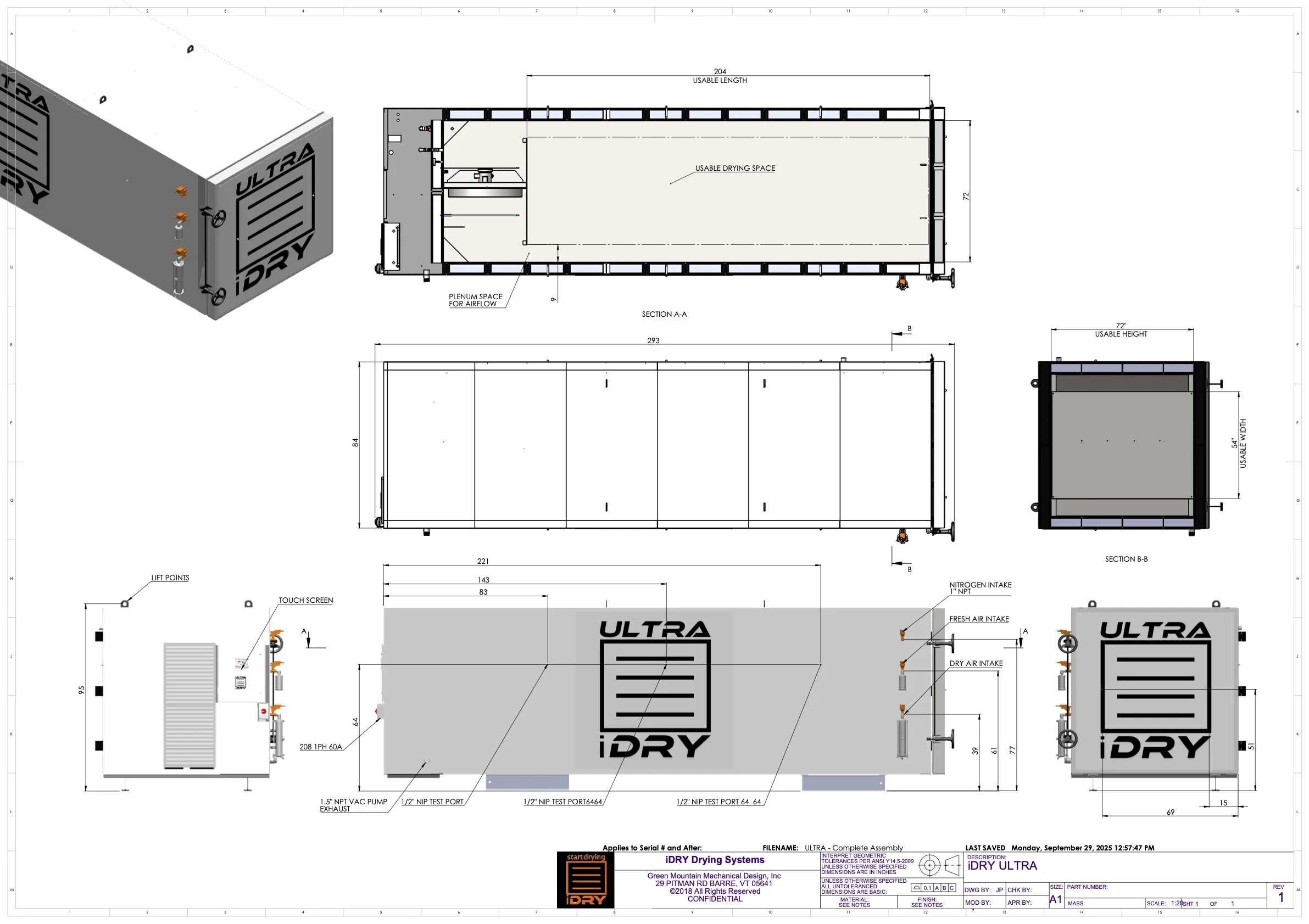
Capacity volume: 460 cubic feet
Power Requirement: 208-240VAC, 1PH, 60A (Electric)
Fully Reversible Fan: 2HP Kiln Duty Motor
Heat Power: 6kw
Humidity Sensor: Capacitive
Temperature Sensor: RTD
Loading: Hand, Tray or Forklift loaded
Max Temp: 180F
Controls: PLC w/ HMI TouchScreen
Total Weight of Equipment: 14,000lbs -
4-6 weeks Lead time
Shipped via Flatbed trailer
-
Non-stick airflow optimized self stacking trays
Schedule a call to discuss your drying application